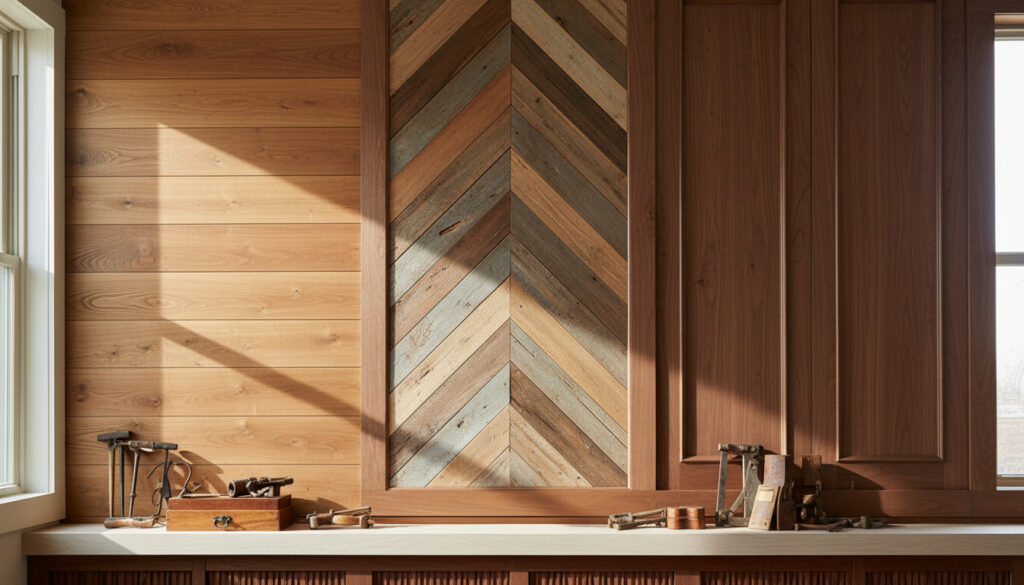
Wood Panelling for Walls – Types Costs Installation Guide
Wood panelling for walls encompasses engineered hardwood panels, slatted acoustic designs, shiplap planks, and veneer sheets that provide durable, stylish surfacing for modern interiors. These installations enhance thermal insulation and acoustic properties while offering natural textures that synthetic alternatives cannot replicate.
Retailers including Lowe’s, Home Depot, and specialized suppliers such as Havwoods and Naturewall distribute these materials for residential and commercial applications. The range extends from lightweight self-adhesive options suitable for DIY projects to custom sequence-matched veneer panels designed for high-end feature walls.
What Are the Different Types of Wood Panelling for Walls?
Vertical and ceiling applications using European Oak
Budget packs to premium custom veneers
Self-adhesive options require minimal tooling
Resists scuffs and scratches with basic maintenance
Market categories differ significantly in construction and application:
- Engineered hardwood panels utilize European Oak for structural strength and prominent grain patterns, suitable for vertical surfaces and ceiling applications according to Havwoods.
- Slatted acoustic panels incorporate real wood veneer to achieve up to 85% sound absorption, targeting home theater and living room installations.
- Shiplap-style planks in birch, hickory, walnut, or pine deliver rustic or coastal aesthetics through overlapping joint designs available at Lowe’s.
- Wood veneer panels bond thin wood layers to MDF or plywood substrates, preventing warping common in solid lumber while enabling sequence-matched designs.
- Self-adhesive planks and cork tiles offer sustainable, low-mess installation for temporary or rental scenarios.
- Lightweight cladding systems provide sustainably sourced alternatives with simplified online ordering capabilities.
- PVC and composite materials mimic wood appearances but lack authentic tactile grain textures.
| Specification | Details |
|---|---|
| Primary Materials | Engineered hardwood, wood veneer, solid wood, cork |
| Wood Species | European Oak, birch, hickory, walnut, pine |
| Weight Class | Lightweight panels under 5 lbs per sq ft |
| Acoustic Rating | Up to 85% sound absorption (slatted designs) |
| Installation Methods | Self-adhesive backing, construction adhesive, mechanical fastening |
| Sustainability | FSC-certified and responsibly sourced options available |
| Primary Applications | Feature walls, ceilings, acoustic treatment, millwork |
| Major Retailers | Havwoods, Naturewall, Lowe’s, Home Depot, Menards |
Further details appear in this companion resource: Wood Panelling for Walls – Types Costs Installation Guide.
How Do You Install Wood Panelling on Walls?
Installation complexity varies significantly by product type. Self-adhesive and lightweight panel systems require minimal tooling and basic DIY competence, while traditional plank applications demand standard carpentry equipment.
Can You Install Wood Panelling Yourself?
Naturewall and The Wood Veneer Hub confirm that many contemporary systems target DIY installers through simplified mounting mechanisms. Slatted acoustic panels specifically feature snap-fit or direct-glue applications that accommodate uneven existing walls without extensive surface preparation.
What Tools and Adhesives Work Best?
Standard installation protocols involve measuring wall dimensions, cutting panels to fit, and securing them via adhesive or mechanical fasteners. Lowe’s offers professional installation services for complex projects, though most residential applications utilize construction adhesive or nails.
Peel-and-stick wood panels eliminate the need for power tools, making them suitable for renters or temporary design updates. These products adhere directly to painted drywall with pressure-sensitive backing.
Slat panel systems effectively conceal damaged or textured underlying surfaces without requiring full wall reconstruction or skim coating.
Heavy engineered hardwood installations may require locating wall studs for mechanical fastening rather than relying solely on adhesive bonds.
According to Akuwoodpanel, specific acoustic slat designs incorporate mounting systems that facilitate rapid installation while maintaining the wood’s natural acoustic properties.
What Are the Costs and Pros/Cons of Wood Panelling?
Pricing structures lack standardized 2025 figures in available data, though material categories suggest wide variance based on wood species, panel construction, and coverage area requirements.
How Much Does Wood Panelling Cost?
Entry-level options appear at major retailers with multi-pack configurations. Home Depot stocks affordable four-pack systems covering 16 square feet, positioning basic wood panelling within reach of modest renovation budgets. Menards provides budget-oriented decorative and wood-grain varieties.
Premium custom veneer panels command higher initial investment than basic shiplap alternatives. Oakwood Veneer notes that sequence-matched and architectural-grade products exceed standard panel pricing due to specialized manufacturing processes.
Is Wood Panelling Expensive Long-Term?
Durability comparisons suggest wood surfaces resist scuffs and scratches more effectively than painted drywall or wallpaper, potentially reducing lifecycle maintenance costs despite higher upfront material expenditure. However, precise cost-per-year calculations remain unavailable in current sources.
| Aspect | Advantages | Limitations |
|---|---|---|
| Durability | Resists scuffs and scratches; requires only dusting or wiping for maintenance | May require occasional damp cloth cleaning; deep cleaning protocols unspecified |
| Performance | Natural thermal and acoustic insulation; biodegradable and sustainable | Standard panels offer moderate sound reduction; specialized acoustic types required for significant echo reduction |
| Aesthetics | Contemporary slat designs avoid outdated associations; suits diverse décor styles | Dark finishes applied excessively may visually reduce perceived room dimensions |
| Environmental Impact | Lower carbon footprint than synthetic alternatives; responsibly sourced options available | Premium sustainable variants carry higher acquisition costs |
What Are Popular Wood Panelling Ideas and Maintenance Tips?
Design Applications for Living Spaces
Contemporary installations favor slatted oak panels for living room feature walls, creating textural focal points without overwhelming visual weight. Havwoods recommends vertical surface engineered hardwood for elegant residential applications.
Matte black slat configurations and coastal-inspired shiplap treatments represent current stylistic directions. Sequence-matched veneer installations serve high-traffic commercial lobbies and hospitality settings according to Oakwood Veneer.
How Do You Clean Wood Panelling?
Maintenance protocols emphasize regular dusting with soft cloths and occasional damp wiping for most finishes. Specific cleaning agents or processes for heavily soiled panels remain unspecified in manufacturer guidelines.
How Has Wood Panelling Evolved Over Time?
The material has transitioned from purely functional wall covering to sophisticated design element across distinct architectural periods.
-
Traditional raised-panel woodwork dominated formal dining rooms and libraries in affluent homes, establishing panelling as a luxury finish.
-
Mass-produced flat panels saturated suburban construction, creating associations with dated interior aesthetics that persist in cultural memory.
-
Contemporary manufacturing techniques produced slatted acoustic panels and engineered hardwood systems that reference natural materials while serving modern performance requirements.
Lowe’s confirms that current offerings have definitively separated from 1970s aesthetic associations, positioning wood panelling as a versatile rather than nostalgic choice.
What Is Definitively Known About Wood Panelling?
Established Information
- Slatted acoustic panels achieve measurable sound absorption rates up to 85% using real wood veneer construction.
- Engineered hardwood and veneer substrates provide superior dimensional stability compared to solid lumber, preventing warping.
- Self-adhesive and lightweight systems accommodate DIY installation without specialized contractor licensing.
- European Oak represents a primary material source for high-end engineered panels.
- PVC and composite alternatives lack the tactile grain texture of authentic wood products.
Remaining Uncertainties
- Exact 2025 pricing tiers for specific wood species and panel dimensions remain unspecified in manufacturer data.
- Precise longevity comparisons between sealed wood panelling and painted drywall require additional longitudinal studies.
- Regional availability and stock levels fluctuate beyond the scope of current retail reporting.
- Quantified home value increases attributable specifically to wood panelling installations lack empirical documentation in available sources.
What Is Wood Panelling for Walls?
Wood panelling for walls constitutes a surfacing system comprising engineered hardwood panels, slatted acoustic designs, shiplap planks, and veneer sheets. These products attach to interior walls and ceilings to provide protective and decorative functions distinct from standard painted drywall.
The category encompasses materials ranging from thin wood veneers bonded to stable substrates to solid hardwood planks. These installations enhance thermal insulation, alter acoustic properties by absorbing or diffusing sound waves, and introduce natural material textures into built environments. Applications include residential living rooms, commercial lobbies, and hospitality settings where durability and aesthetic warmth prove desirable.
Unlike synthetic wall coverings, authentic wood panelling provides biodegradable surfacing with potential for responsible sourcing certification. The material serves both practical and visual purposes, concealing wall imperfections while contributing to interior design schemes.
Where Does the Evidence Come From?
Engineered hardwood panels designed specifically for vertical surfaces represent an innovative evolution in wood surfacing technology, utilizing European Oak for strength and grain consistency.
— Havwoods, specialist wood supplier
Slatted acoustic panels enhance sound absorption up to 85% while maintaining eco-friendly certifications and straightforward installation protocols suitable for residential environments.
— Naturewall, sustainable panelling manufacturer
Wood panelling has evolved significantly from historical styles, with contemporary slat and engineered designs avoiding the outdated associations of previous decades.
— Lowe’s, national home improvement retailer
What Should You Remember About Wood Panelling?
Wood panelling for walls encompasses diverse product types from acoustic slats to engineered hardwood, offering DIY-friendly installation and sustainable material options. While pricing varies significantly between basic shiplap and premium veneers, the material provides superior durability and thermal properties compared to painted surfaces. Contemporary designs have definitively separated from outdated aesthetic associations, functioning instead as versatile solutions for modern Wood Panelling for Walls – 2025 Types, Costs and Installation Guide requirements.
Quick Questions About Wood Panelling
Does wood panelling make a room smaller?
Warm or dark-toned finishes applied extensively may visually reduce perceived space, though lighter wood selections and strategic accent placement mitigate this effect.
Is wood panelling outdated?
Contemporary slatted and engineered designs have evolved beyond 1970s associations, functioning as current architectural elements rather than retro installations.
How do you remove old wood panelling?
Removal involves prying panels from wall studs or adhesive backing, though specific techniques vary based on original installation methods and underlying wall construction.
What adhesive works best for wood panelling?
Construction adhesive suits most applications, though self-adhesive backing on specific products eliminates additional bonding agents for lightweight installations.
Can wood panelling be installed on ceilings?
Engineered hardwood panels and certain slat systems accommodate ceiling applications, provided mounting hardware addresses gravity loading and structural support requirements.
More related posts
 Diane Lane: Biography, Children, Relationships, and Career
 Jacob Fortune-Lloyd: Background, Star Wars Role and More
 When Is Happy Gilmore 2 Coming Out – Release Date, Cast, Plot
 La Bomba Carolina Herrera: Scent Notes, Review & Buy Guide
 Mucus Plug Color Chart – What Each Color Means
 PSG vs Le Havre – 4-1 Result, Goals and Key Stats
 Timothée Chalamet and Kylie Jenner: Timeline & Age Gap