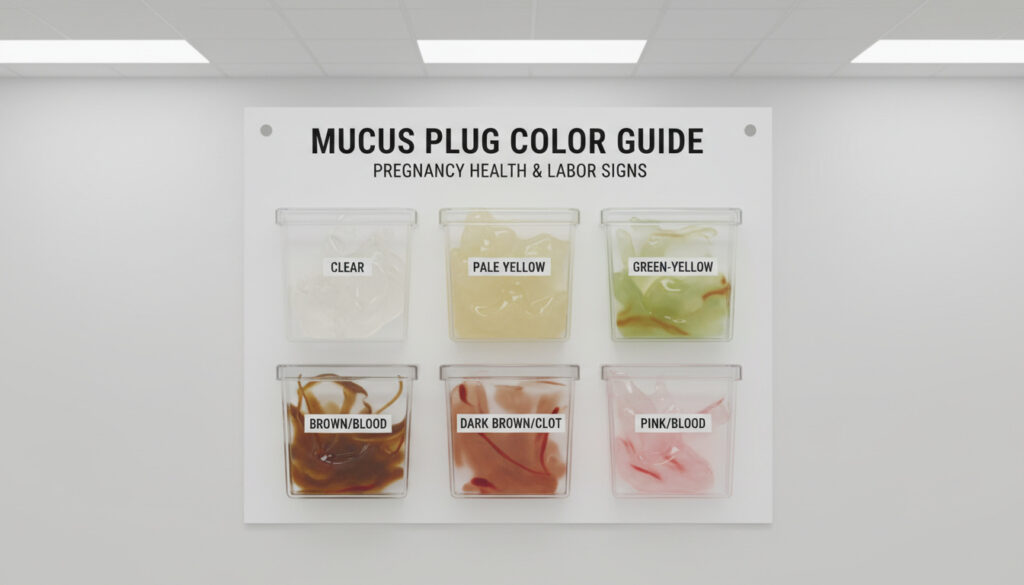
Mucus Plug Color Chart – What Colors Mean in Pregnancy
The mucus plug serves as a protective barrier during pregnancy, forming a dense, gelatinous seal over the cervix to shield against bacterial infection. Understanding variations in color and texture helps expectant parents distinguish between normal physiological changes and potential warning signs requiring medical attention.
This thick accumulation of cervical mucus typically emerges during the final weeks of gestation, though its appearance varies significantly among individuals. While visual guides categorize these variations using a Mucus Plug Color Chart, medical professionals emphasize that context—including timing, quantity, and accompanying symptoms—matters more than hue alone.
Health authorities confirm that color ranges from transparent to blood-tinged depending on cervical activity, with certain shades requiring immediate consultation.
What Is a Mucus Plug and What Does It Do?
The mucus plug constitutes a thick collection of mucus that seals the cervical opening throughout gestation. Cleveland Clinic describes this structure as forming early in pregnancy to prevent bacteria from ascending into the uterine cavity.
Clear/White
Translucent, jelly-like consistency indicating an intact protective barrier.
Pink
Blood-tinged streaks suggesting cervical dilation has begun.
Brown
Tan discoloration from oxidized blood following examinations or activity.
Green/Yellow
Opaque tinting potentially signaling infection or fluid abnormalities.
Key clinical observations include:
- Expulsion does not indicate immediate labor onset, as delivery may follow within hours or several weeks.
- Color variations reflect individual physiology rather than standardized diagnostic criteria.
- Green or yellow discoloration always warrants immediate medical consultation.
- The plug can regenerate if expelled before 37 weeks gestation.
- Clinical significance increases when color changes coincide with contractions or pressure.
| Color | Visual Description | Physiological Meaning | Action Required |
|---|---|---|---|
| Clear/White | Translucent gel, egg-white consistency | Normal protective barrier | Routine monitoring |
| Pink | Streaked with light blood | Cervical dilation beginning | Watch for labor signs |
| Brown | Tan to dark brown mucus | Oxidized blood from irritation | Monitor unless painful |
| Yellow | Opaque, thickened discharge | Possible infection | Contact provider promptly |
| Green | Tinted or discolored | Infection or meconium risk | Urgent evaluation needed |
| Bright Red | Fresh blood, heavy flow | Active bleeding | Emergency care |
What Do Different Mucus Plug Colors Mean?
BabyForest categorizes mucus plug colors across five primary variations, each conveying specific physiological information. Clear or white discharge represents the baseline state, indicating the cervix remains sealed and protected.
Clear and White Variations
Transparent or milky-white mucus constitutes the most common presentation, reflecting normal hormonal stimulation of cervical glands. Natural Cycles notes this appearance suggests proper barrier function without cervical trauma.
Yellow Discoloration
Opaque yellow mucus occasionally indicates minor infection or concentrated secretions. While sometimes benign, this coloration requires provider consultation to rule out bacterial complications.
Texture distinguishes the plug from normal discharge. The mucus plug presents as thick, sticky, and jelly-like—similar to raw egg whites—whereas routine pregnancy discharge (leukorrhea) remains thinner and more fluid.
Pink and Bloody Mucus Plug: Labor Signs Explained
Pink or blood-tinged mucus often signals the “bloody show,” a phenomenon occurring when small capillaries rupture as the cervix softens and dilates. Enfamil confirms this represents a typical pre-labor development rather than cause for alarm.
Bloody Show Versus Concerning Bleeding
Mayo Clinic distinguishes between light streaking associated with cervical changes and heavy bleeding. Light pink or streaked mucus indicates surface vessel rupture during dilation.
Heavy flow saturating pads or bright red blood suggests active bleeding requiring emergency evaluation. Babylist emphasizes that while bloody show involves minimal spotting, significant hemorrhage demands immediate transport to medical facilities.
Brown or Green Mucus Plug: When to Worry
Brown Coloration Context
Brown mucus typically contains old blood oxidized during passage through the cervix. Cloudnine Care attributes this coloration to recent intimate activity, cervical examinations, or minor irritation from previous weeks.
Brown coloration frequently results from recent intimate activity or cervical examinations, representing older blood that has oxidized before expulsion rather than fresh hemorrhage.
Infection Indicators
Green or yellow-green mucus potentially indicates bacterial infection or meconium staining. BabyForest advises immediate physician contact for these colors to rule out intra-amniotic infection or fetal distress.
Bright red bleeding or heavy flow requires immediate medical attention, as this may indicate placental abruption or other complications rather than normal pre-labor changes.
When Does the Mucus Plug Fall Out?
Expulsion timing varies significantly, though most cases occur after 37 weeks gestation. The sequence typically follows this pattern:
- First Trimester Formation: The mucus plug begins developing around weeks five to six as cervical glands produce protective secretions.
- Third Trimester Preparation: Hormonal shifts gradually soften the cervical structure, though the seal typically remains intact.
- Pre-Labor Expulsion: Loss most commonly occurs between weeks 37 and 40, though earlier expulsion without complications remains possible.
- Labor Window: Active labor may commence within hours, days, or weeks following expulsion, necessitating monitoring for contractions and pelvic pressure.
What Remains Certain Versus Uncertain About Mucus Plug Colors?
| Established Facts | Individual Variations |
|---|---|
| Pink and brown tinges typically reflect cervical changes or old blood from minor trauma. | Exact timing between expulsion and labor onset varies significantly between individuals and pregnancies. |
| Green or yellow discoloration indicates potential infection requiring clinical evaluation. | Regeneration capabilities depend on gestational age and individual cervical physiology. |
| Clear or white represents the standard physiological baseline. | Volume and physical size of expelled material differs substantially between cases. |
How Does the Mucus Plug Differ From Other Pregnancy Discharge?
Normal pregnancy discharge (leukorrhea) remains thinner, milky white or light yellow, and odorless throughout gestation. This secretion increases with hormonal changes but lacks the dense, gelatinous structure characteristic of the mucus plug.
Amniotic fluid presents as watery, clear or pale yellow, and continuously leaks or gushes rather than emerging as a jelly-like clump. Green or yellow tinting in fluid suggests fetal distress or infection, requiring immediate medical assessment distinct from mucus plug evaluation.
For those monitoring male health factors during the pregnancy journey, reviewing Shilajit Benefits for Male provides additional wellness context.
What Do Medical Authorities Say About Mucus Plug Colors?
The mucus plug is a thick collection of mucus that seals the opening of the cervix to prevent bacteria from entering the uterus during pregnancy.
— Cleveland Clinic
You might notice a thick discharge that is clear, pink or slightly bloody. This is the mucus plug, and it is a sign that labor could start soon.
— Mayo Clinic
What Should You Remember About Mucus Plug Colors?
Color variations from clear to blood-tinged generally reflect normal physiological processes, while green, yellow, or bright red hues demand immediate medical consultation. Timing remains unpredictable, as expulsion may precede labor by hours or weeks. Providers should evaluate any expulsion occurring before 37 weeks or accompanied by pain, fever, or foul odor.
Common Questions About Mucus Plug Colors
Can the mucus plug grow back if lost early?
Yes. The cervical glands can regenerate the protective seal if expulsion occurs before 37 weeks, provided no underlying complications exist.
How long after losing the mucus plug does labor typically start?
Labor may commence within hours, days, or even weeks. The interval varies significantly and requires monitoring for additional signs like contractions.
Is losing the mucus plug painful?
Expulsion itself is typically painless, though some experience mild cramping. Severe pain accompanying loss requires immediate medical evaluation.
Can you lose the mucus plug gradually?
Yes. It may exit as a single clump, in pieces over several days, or mixed with increased discharge, making identification challenging.
Does clear mucus plug mean labor is far away?
Not necessarily. Clear plugs simply indicate the barrier has dissolved without bleeding. Labor timing remains independent of color alone.
More related posts
 Danny Elfman: Biography, Allegations, and Net Worth
 Shadow of the Colossus: PC, PS5 Availability & Playtime Guide
 Car Hire Faro Airport: Compare Cheap Deals & Avoid Hidden Fees
 New Digital ID UK: Mandatory Plans Dropped to Voluntary
 Class Charts Parent Login: Step-by-Step Guide
 Pensioner Energy Saving Advice: Tips, Tariffs & Government Help
 Co-op Cyber Attack: £206m Cost, Data Breach & Updates
 Five Nights at Freddy’s 2: 2025 Release, Cast & Scary Factor